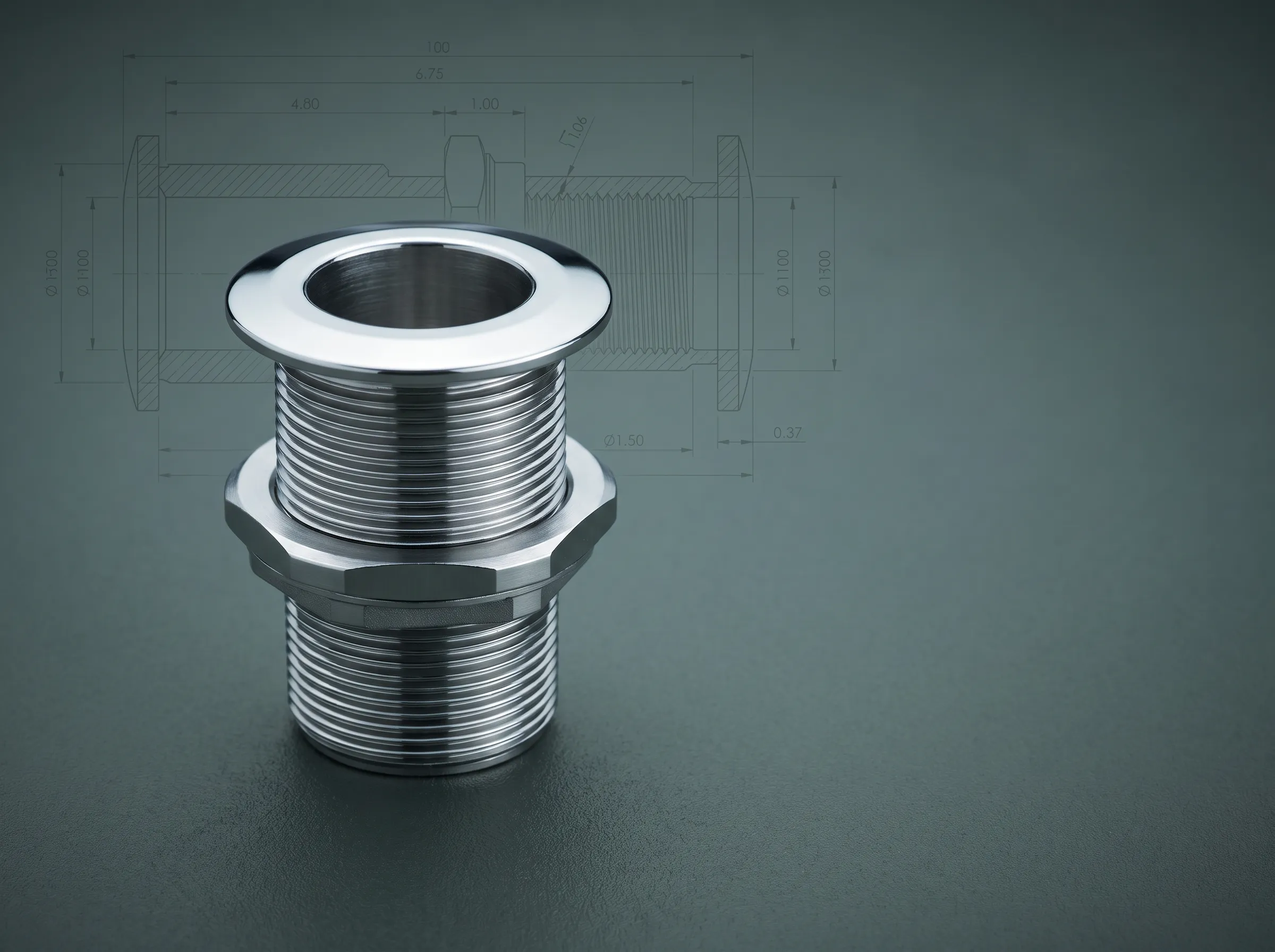
The difference between 316 and 304 stainless steel in marine service is not price but chemistry: 316 carries a molybdenum addition that stabilises the passive film against chloride attack, and 304 does not. That difference does not appear as slower, more even rusting. It appears as localised attack that can drive through a wall while the surface around it still looks clean.
In short
- 316 and 304 are both chromium-nickel austenitic stainless steels; the difference that matters at sea is the molybdenum in 316, which makes the passive film harder to break down locally and quicker to re-form.
- Stainless steel in seawater rarely fails by uniform rusting: it fails by pitting and crevice corrosion, localised attack that concentrates at one point and is easy to miss on inspection.
- 304 is legitimate in dry, ventilated interiors where parts stay inspectable and replaceable; it is never the right choice below the waterline, in drainage paths, in the splash zone, or under a gasket.
- Resistance depends on surface condition as much as on alloy: embedded iron, missing passivation, untreated weld heat tint and non-draining crevices erode the margin 316 was bought for.
- Knowing what you are buying takes documentation plus process: an EN 10204 3.1 certificate traceable to the batch, and a stated cleaning, passivation and post-weld procedure.
What actually separates 304 from 316 in salt water
Both are austenitic stainless steels built on iron, chromium and nickel. Chromium is what makes them stainless: it forms a thin, adherent, chromium-rich oxide layer, the passive film, which re-forms by itself when the surface is scratched, provided oxygen reaches the metal. What a stainless steel does in service is governed by that film.
316 differs from 304 by a deliberate molybdenum addition. Molybdenum does not make the film thicker; it makes it harder to destroy at a single point and faster to re-establish once chlorides have broken through. Chloride ions are small, mobile and specifically aggressive toward passive films: they concentrate at a weak point, an inclusion, a scratch, a salt deposit, and break the film there while the rest of the surface stays passive.
That geometry is the problem. A small depassivated spot inside a large passive area becomes a tiny anode facing a very large cathode, so the attack concentrates instead of spreading, and molybdenum raises the chloride level and temperature at which it becomes self-sustaining. 304 is therefore not an economy version of 316: its passive film was formulated for an environment without standing seawater.
Why marine failure looks like a hole, not like rust
The failure modes that matter in salt water are pitting and crevice corrosion, and both are localised. A pit begins where the film has broken down, and the chemistry inside the cavity keeps it going: metal dissolves, metal ions hydrolyse and drive the local pH down, and chlorides migrate in, producing a micro-environment far more aggressive than the seawater outside.
Crevice corrosion runs on the same chemistry but needs only geometry. Any gap narrow enough to hold liquid and too tight to exchange it will serve: under a washer, between a flange face and a deck, in a thread engagement, beneath a bedding compound that has released. Oxygen inside is consumed and not replaced, so the film cannot regenerate.
This is why visual inspection misleads. The mouth of a pit can be far smaller than the cavity beneath it, and the visible sign of crevice attack is usually a brown weep from the edge of a joint, which is corrosion product escaping rather than the damage itself. The inverse mistake is as common: a uniform orange bloom is often not alloy failure but embedded iron rusting on top of sound stainless.
| AISI 304 | AISI 316 | |
|---|---|---|
| Alloy feature that matters at sea | No molybdenum addition | Molybdenum added |
| Passive film under chloride load | Breaks down at lower chloride loads, repassivates less readily | Withstands higher chloride loads, re-forms more readily |
| Typical failure mode | Pitting and crevice corrosion, little general rusting | Same mechanisms, harsher conditions needed to start |
| Appropriate use on board | Dry ventilated interiors, inspectable items | Exterior, deck, splash zone, drainage, through hull fittings |
| Principal limitation | Designed for an environment without standing seawater | Margin lost if the surface is contaminated or sealed in a crevice |
Where 304 still belongs on board, and where it never does
304 is a competent engineering alloy and there is no reason to banish it from a vessel. It is defensible where three conditions hold together: the part lives in a dry, ventilated interior; it sees no salt-laden air, spray or wash-down; and it can be inspected and replaced without consequence. Interior joinery fittings and brackets in dry technical spaces sit inside that envelope.
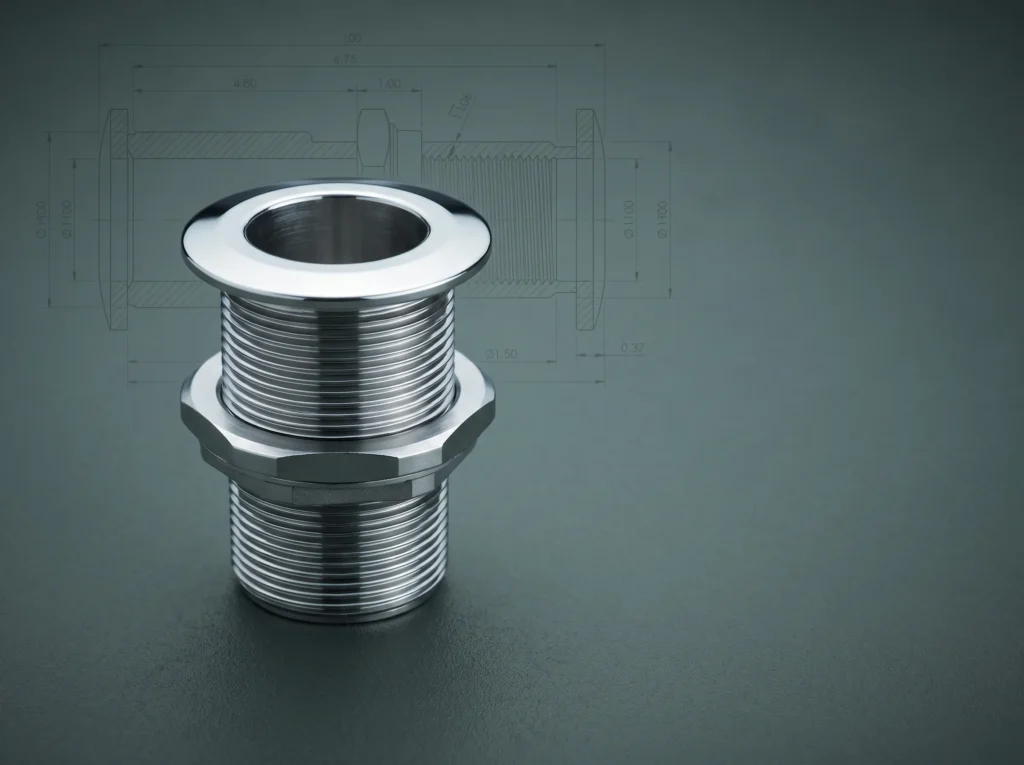
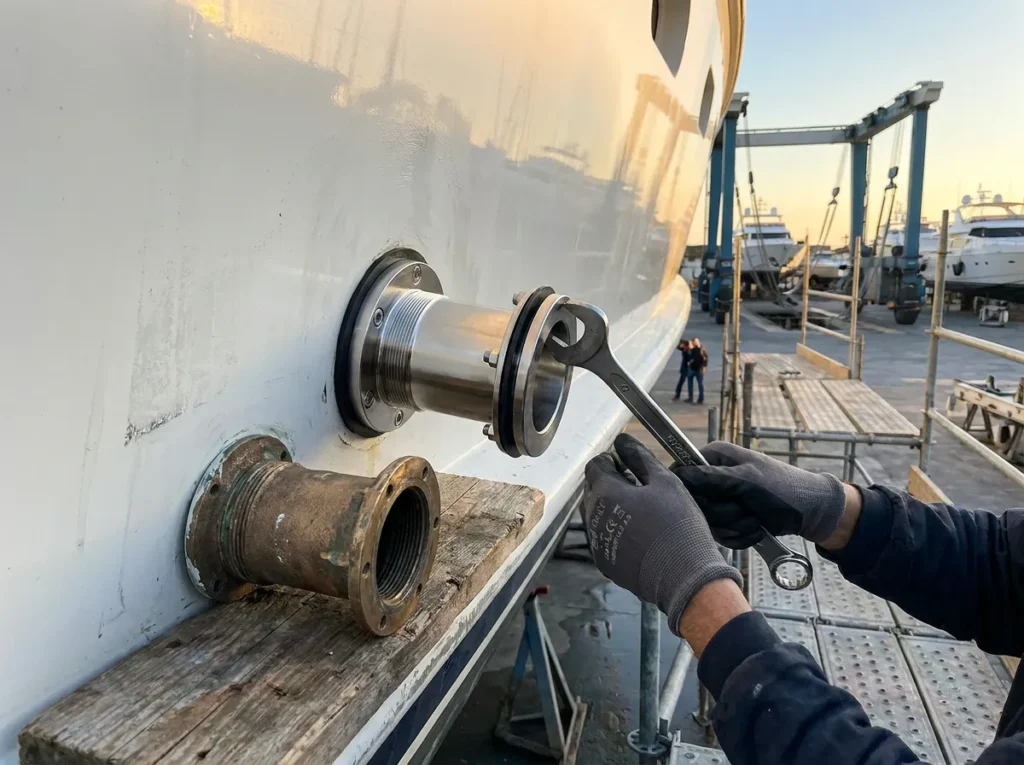
It is never the right choice when any of those conditions fails. That excludes anything below the waterline, in a drainage path such as a scupper or deck drain, in the splash zone, bedded on sealant or compressed onto a gasket where seawater can stand, in a bilge, or whose replacement would mean a haul-out. Through hull fittings belong to that group, and ISO 9093 treats seacocks and through hull fittings as safety items rather than hardware.
The practical test is not whether the part will get wet. It is whether it can get wet without drying, and what it costs to find out in service.
Why a badly finished 316 can lose to a well treated 304
This is what datasheets leave out: the passive film is a surface phenomenon, so the real performance of a component is set by the condition of its surface, and a certificate stating 316 says nothing about that condition.
Free iron contamination is the most common cause. Carbon steel tooling, shared abrasives, media previously blasted on mild steel, grinding dust drifting from a fabrication bay, even storage against a steel rack, all leave particles embedded in the surface, and each one rusts and acts as an initiation site. Chemical passivation removes that free iron and lets a uniform film form; the practice is codified, ASTM A380 covering cleaning and descaling and ASTM A967 chemical passivation.
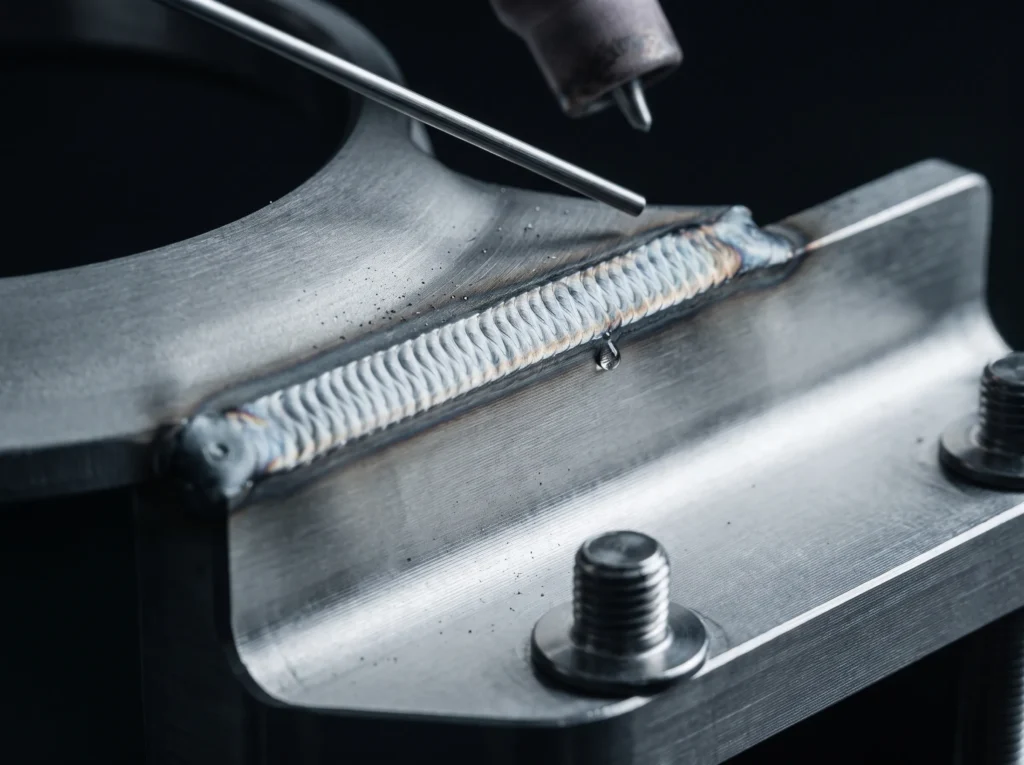
Welding introduces two problems. The heat tint alongside a weld sits over metal locally depleted of chromium, so the colour marks a genuinely weaker zone rather than a stain. Removing it with a carbon steel brush changes the appearance while leaving the depletion and adding contamination; pickling or controlled removal followed by repassivation restores the surface. The second is sensitisation in the heat affected zone, governed by carbon content.
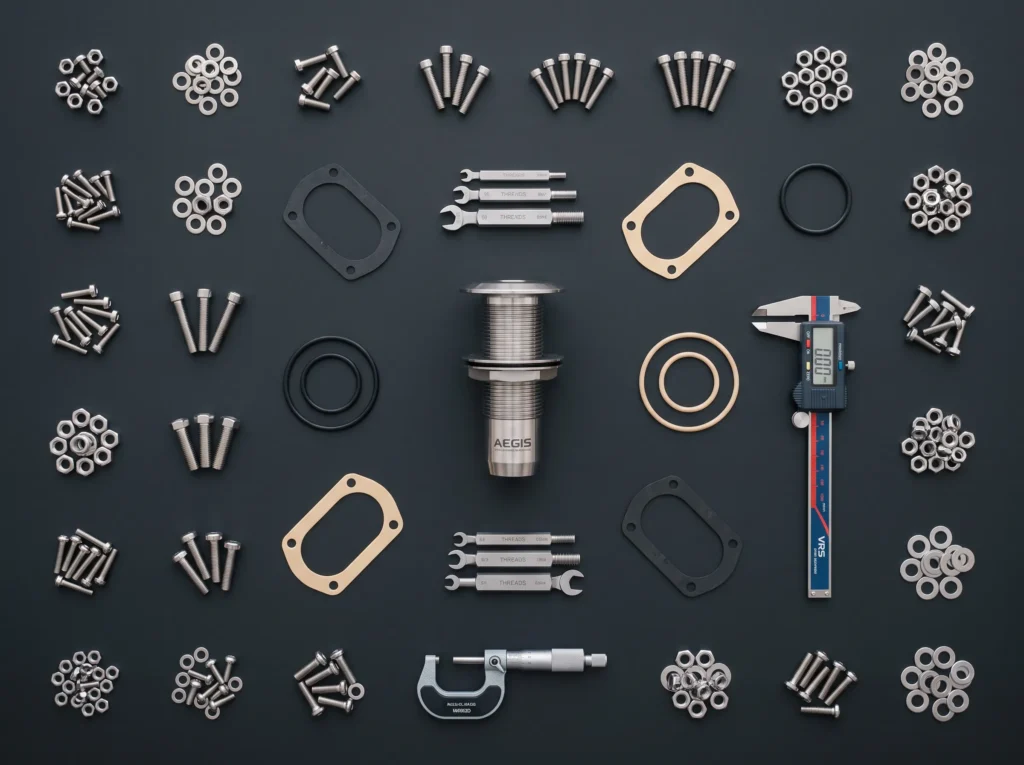
Finish and geometry do the rest. A coarse directional ground finish retains salt that a fine uniform finish sheds under a rinse, and a joint that traps water without draining builds a crevice whatever the alloy. Fasteners deserve attention of their own, since they arrive through a different supply chain and are often the lowest specified part of an assembly, and they should carry their own certification.
Eliminating the weld removes a whole category of risk, which is the logic behind components such as Aegis, a through hull fitting machined from a single block: no heat affected zone, and no weld line crevice to treat afterwards.
What to ask a supplier before you order
In a refit yard in Viareggio or anywhere else on the Mediterranean, the components that come back early are rarely the ones with the wrong designation on paper. They are the ones where the designation was right and the process was not.
| Question to ask | What a usable answer sounds like |
|---|---|
| Which alloy, in which form and condition? | AISI 316 or 316L with an EN 10204 3.1 inspection certificate traceable to the delivered batch, not a generic declaration of conformity |
| How was the part cleaned after machining? | A named sequence: degrease, remove free iron, passivate chemically. “We wipe it down” is not a process |
| Were there welds, and how was the weld zone treated? | Pickling or controlled removal of heat tint, then repassivation, or no weld because the part was machined from solid |
| Is stainless handled separately from carbon steel? | Dedicated tooling, abrasives and storage, since shared grinding media contaminate 316 as effectively as rust |
Frequently asked questions
Is 316 stainless steel worth the extra cost over 304 for marine use?
The question assumes the two alloys do the same job at different prices, and in chloride they do not. For anything exposed to seawater, spray or trapped moisture, 316 is the specification and 304 is an alloy for a different environment.
Will 304 stainless steel rust in salt water?
It will corrode, but not usually as uniform surface rust. The characteristic result is pitting and crevice corrosion, localised attack that can penetrate a section while the surrounding surface still looks acceptable.
How can you tell 316 and 304 apart?
Not by eye, and not reliably with a magnet, because cold working makes austenitic stainless steels slightly magnetic regardless of grade. The dependable routes are a certificate traceable to the batch and positive material identification by X-ray fluorescence on the part itself.
Why is my 316 stainless hardware rusting?
The usual explanations are embedded iron from carbon steel tooling or abrasives, a surface never passivated after machining or welding, and a crevice holding seawater without draining. All three are process conditions rather than alloy failures.
Is 316L a better choice than 316 for marine hardware?
The L designates a lower carbon content, which matters where the part is welded because it reduces the risk of sensitisation in the heat affected zone. For an unwelded machined part the distinction weighs far less.