Marine hardware lifespan is not a property of the material: it is the combined outcome of four variables — design, machining, installation and maintenance — and a fitting almost always fails at the weakest link in that chain rather than wearing out evenly. Thirty years is a plausible horizon for a well-designed stainless component that was correctly installed and is periodically inspected. It is not a guarantee, and no grade of steel delivers it on its own.
In short
- Marine hardware lifespan is set by four variables — design, machining, installation and maintenance — and the shortest of the four caps the result.
- Stainless steel resists seawater through a passive film that needs oxygen to reform, which is why attack begins inside confined gaps rather than on exposed surfaces.
- Fittings reach end of life in four recognisable ways: localised corrosion, mechanical wear, failure of the sealing interface, and obsolescence when spares no longer exist.
- Replacement on a fixed calendar renews sound parts and misses the compromised one, because degradation concentrates at interfaces instead of spreading evenly.
- A boat kept on its berth has the mildest mechanical duty and the harshest chemical one: standing water in drains, dried salt and mechanisms that never move.
- Every component pulled at a refit resolves to one of three outcomes — refurbish, replace with an equivalent, or remake to measure.
- The refit sets the ownership cost of the next two decades, because each decision determines how often a fitting must be opened again.
What marine hardware lifespan actually depends on
Marine hardware lifespan is set by four independent variables, and they are not interchangeable: a flawless design installed badly fails early, while a modest one installed and maintained properly outlasts it.
Design
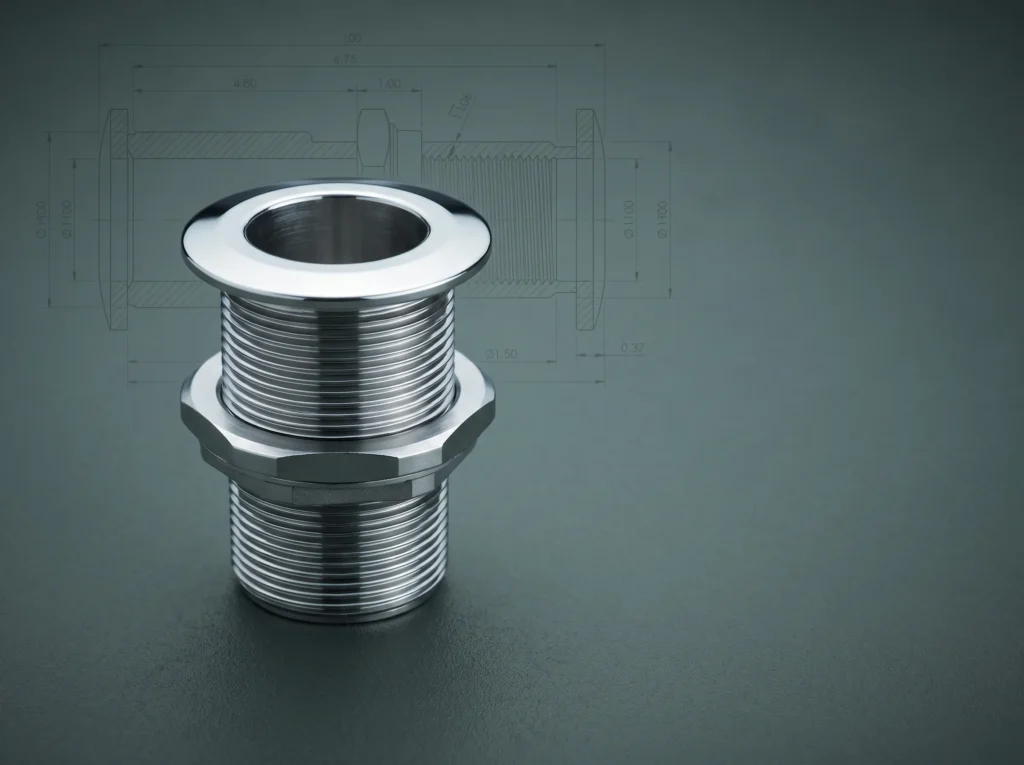
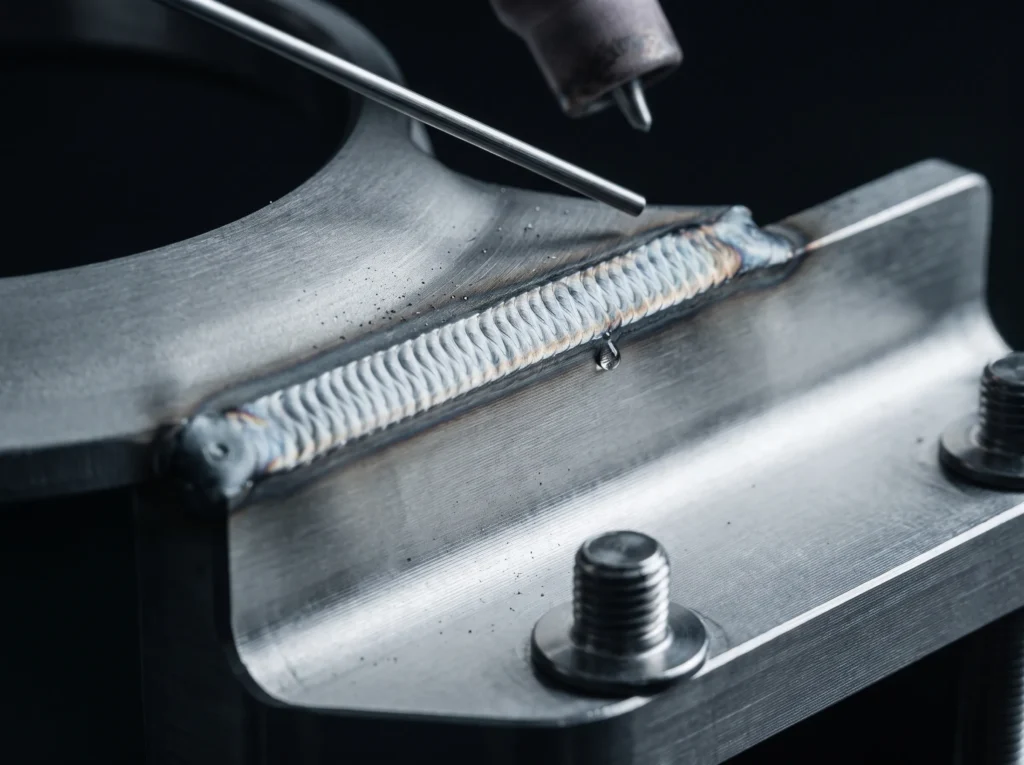
Geometry decides where water sits and whether the passive film can breathe. A blind gap, a sharp internal corner that traps deposits, a bolted joint with a captive washer: each starves a small confined volume of oxygen, and there the oxide film cannot reform. A through hull fitting machined from a single solid billet — the approach behind Aegis, produced without welds — removes the weld and its heat affected zone from the problem altogether.
Machining and finish
Surface condition governs initiation. A rough or contaminated surface holds chlorides, deposits and biofilm, all of which make local breakdown of the passive film more likely. Free iron transferred from carbon steel tooling rusts on the surface of a sound AISI 316 part and produces staining that looks like failure but is contamination; passivation removes it. Grade choice belongs here too: 316L limits carbide precipitation in welded assemblies, duplex raises strength and chloride resistance where loads justify it.
Installation
Installation is where service life is most often given away. A stainless fastener taken straight into aluminium 5083 without an isolating bushing creates a galvanic couple with an unfavourable area ratio, and the aluminium pays for it. Under-torque leaves micro-movement and produces fretting; over-torque galls austenitic threads and can distort a sealing face that left the workshop flat.
Maintenance
Rinsing, drains kept clear, elastomers renewed before they take a permanent compression set, and above all joints opened periodically. Maintenance that never disassembles anything inspects only the half of the component that does not fail.
The four ways a fitting reaches end of life
Almost every replacement traces back to one of four modes. Recognising which one is in progress determines whether the part can be saved.
| Failure mode | Early signal | How it is verified | Decision it points to |
|---|---|---|---|
| Localised corrosion (crevice, pitting) | Rust weeping from a joint line; dark halo at a gasket edge; staining that returns after cleaning | Mating face examined under magnification after dismantling; dye penetrant if a crack is suspected | Replace if pitting is through-thickness or in a sealing face; repassivate if superficial |
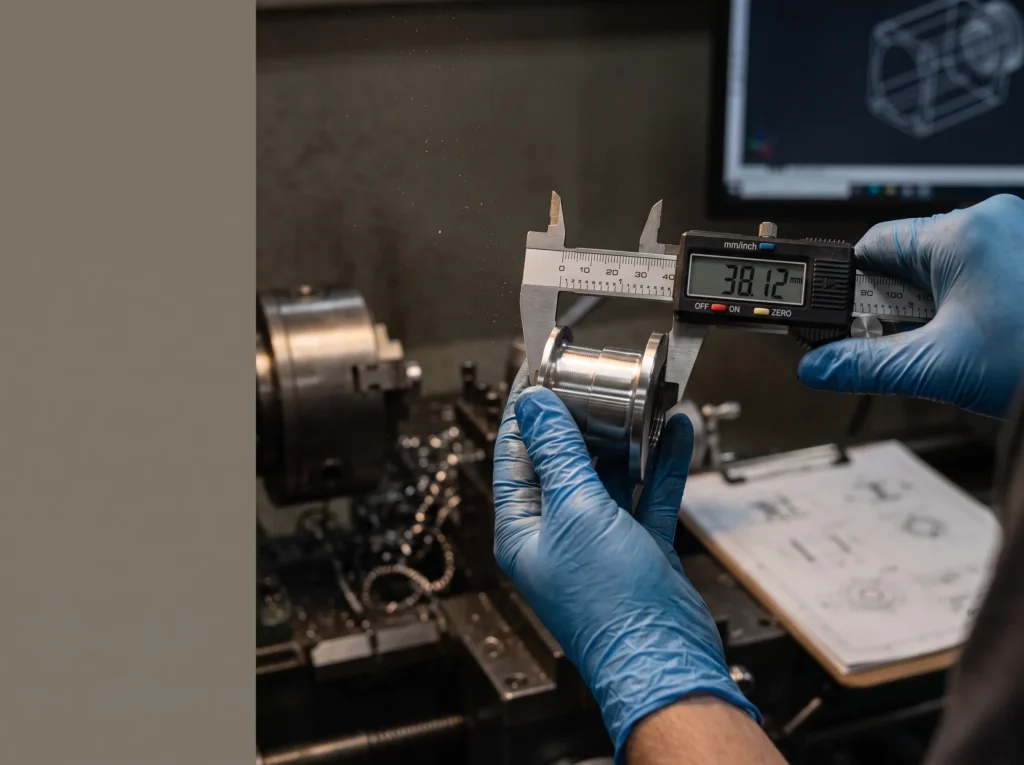
| Mechanical wear and loss of geometry | Growing clearance; a hinge that no longer closes on its own line; fretting debris; galled threads | Feeler gauges or dial indicator against a sound unit | Refurbish with new pins and bushings if the body is sound; remake if seats have gone oval |
| Sealing interface failure | Ingress that returns after tightening; permanent impression in the elastomer; hardened bedding | Compression set check, water test, flatness of the rebate | Renew the seal and true the seat; remake if the rebate is corroded |
| Functional obsolescence | Spares unavailable; layout or requirement changed | Component dossier; dimensions taken off the existing part | Bespoke remake to the existing interface |
The fourth mode is not a failure of the part but of supply, and it is the one most likely to stop a refit, because it surfaces only once the fitting has been removed.
Why the weakest link is almost always an interface
Fittings rarely wear out evenly. They fail where two things meet: a flange against a hull skin, a hinge pin in its seat, a gasket in its rebate.
The mechanism is well understood. Inside a narrow gap, dissolved oxygen is consumed and not replaced, the passive film on AISI 316 cannot reform, chloride concentrates, the local environment acidifies and the process becomes self-sustaining. That is why crevice corrosion progresses under a washer while the surrounding surface stays bright. Molybdenum gives 316 a real advantage over 304 here, but it raises the threshold rather than removing it.
Flow matters as much as grade: a scupper line that empties completely after every wave is in a different situation from one holding a standing column of seawater. The consequence for inspection is blunt. The visible outside of a fitting is its best-maintained and least informative part.
Inspection beats replacement on a calendar
Replacing hardware on a fixed schedule renews whatever is on the list and leaves untouched whatever is not: because failure concentrates at specific interfaces rather than spreading across the boat, it usually renews sound parts and misses the compromised one. The schedule worth keeping is an inspection schedule.
What a pre-refit survey should cover
Every hull penetration, including its internal face. Every drain and scupper line end to end, tested with water rather than by eye. Every sealing rebate together with its elastomer. Every mechanism, with clearance measured rather than estimated. Every junction between dissimilar metals. And every fastener that has been removed before, because a joint opened once has already lost its original bedding.
Usage profile sets the interval
A chartered boat accumulates opening cycles on hatches and hinges far faster than a privately used one, and its mechanisms reach measurable clearance first. A boat that stays on its berth has the mildest mechanical duty and the harshest chemical one. There is no universally correct interval, only one matched to the duty the boat actually performs.
Refurbish, replace or remake
Every component pulled during a refit resolves to one of three outcomes. The criteria below are what usually tips the balance.
| Criterion | Points to refurbishing | Points to an available replacement | Points to a bespoke remake |
|---|---|---|---|
| Condition of the base body | Sound, corrosion superficial | Irrelevant, the part is retired | Pitting in a sealing face, deformed seat, cracked boss |
| Availability | Wear parts obtainable | A current product matches function and interface | Out of production, no equivalent |
| Interface constraints | Nothing changes | New part matches bolt pattern and aperture | Existing holes must be preserved, nothing standard fits |
| Original requirement | Unchanged | Unchanged | Higher load, new seal type, revised drainage |
| Consistency across the boat | One fitting in a set that still matches | Whole set renewed together | Fittings of different eras to be unified |
| Lead time | Shortest | Short | Longest, planned into the yard period |
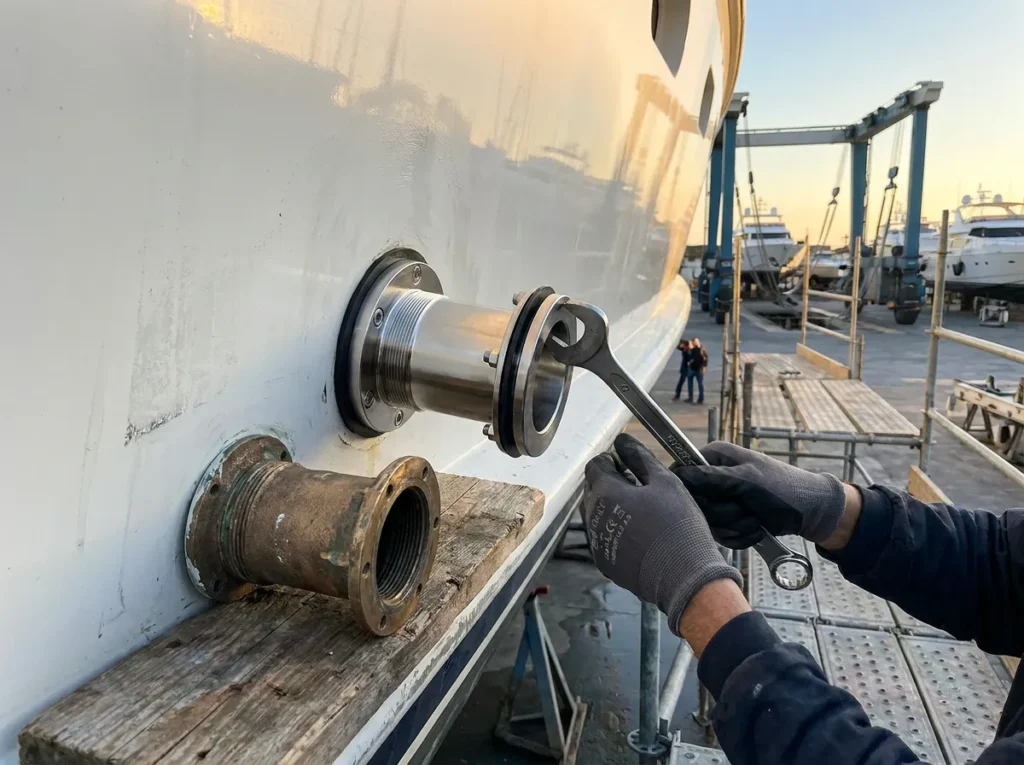
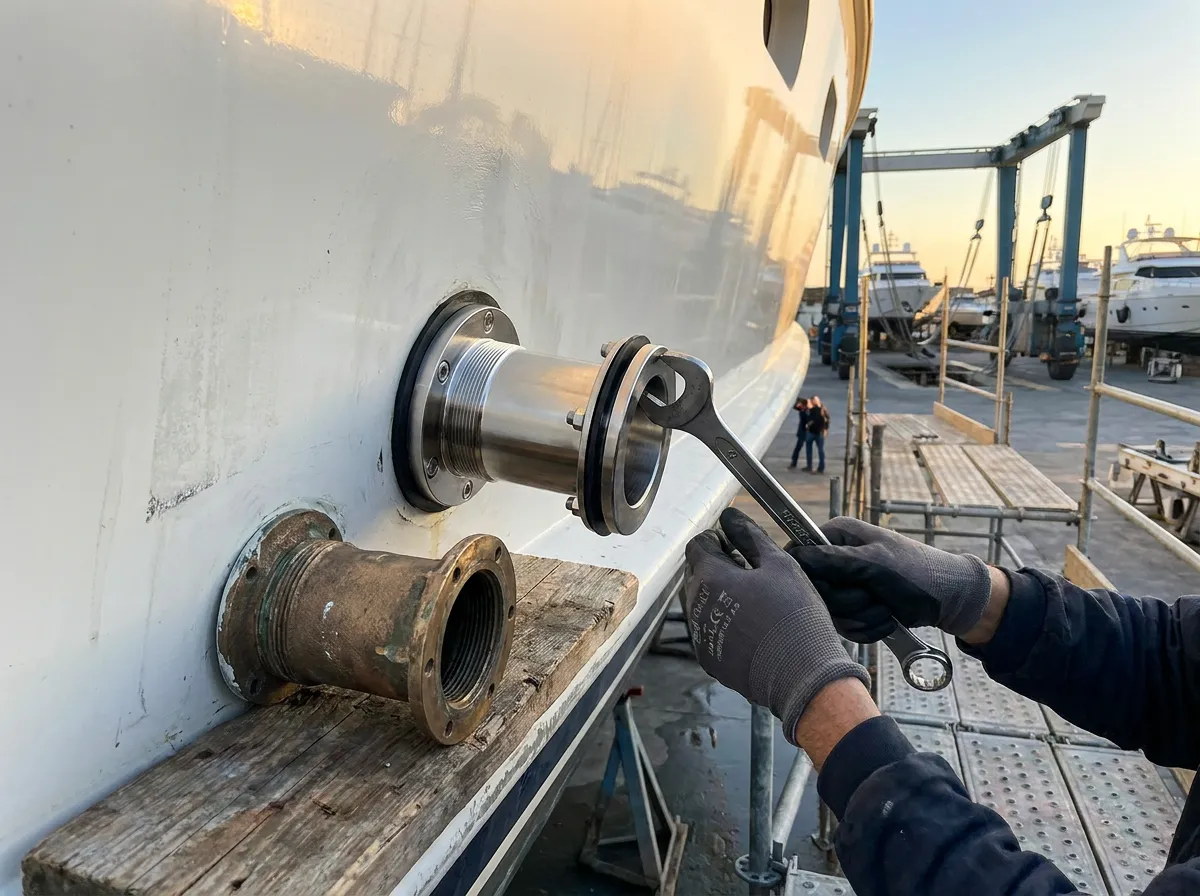
Remaking is less exotic than it sounds. An existing part, even a corroded one, carries its own specification: bolt pattern, thread form, sealing geometry and envelope are taken off it directly, so the interface is reproduced exactly while the detail behind it improves — larger internal radii, a better-supported seal groove, an isolating bushing where dissimilar metals were in direct contact. A mechanism such as Chiron, a pantograph hinge, shows the point: its kinematics can be reproduced to an existing opening even when the original unit is long gone. Much of this hardware is built in Viareggio and the surrounding Italian marine district in the first place, which makes working back from a sample routine.
Retrofit on classic and older boats
On an older hull the rule is to preserve what is visible and improve what is not. Outline, proportion and finish stay as drawn; the seal groove, the drainage path and the isolation between dissimilar metals are where a modern remake earns its place.
Material substitution deserves particular care. Replacing a bronze fitting with a stainless one changes the galvanic relationship of everything connected to it, so it is a decision about the system, not the part. Where hardware falls under the requirements applied to openings and closing appliances by ISO 12216, substitution has to be agreed rather than assumed.
The refit decides the cost of the next twenty years
Total cost of ownership is not the invoice for the fitting. It is the invoice plus every subsequent haul-out, disassembly, resealing and replacement the fitting goes on to require. A component chosen because it was inexpensive, then opened three times in a decade, has cost more than the expensive one opened once.
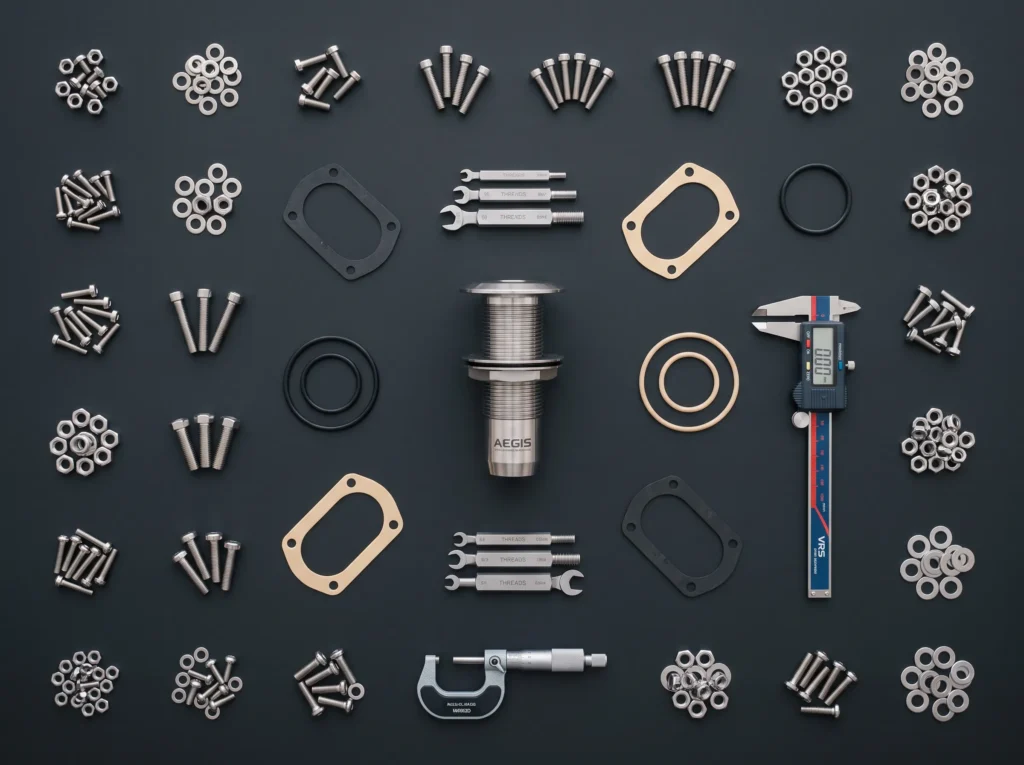
Two habits carry most of the benefit. The first is planning a refit across more than one season, so long-lead bespoke items are specified while the boat is still in the water: hardware found to be unobtainable during a yard period becomes unplanned downtime. The second is the component dossier — material certification where it was supplied, such as EN 10204 3.1, drawings or take-off dimensions, seal references, torque figures, installation dates and photographs of each joint while open. Class societies such as Lloyd’s Register, ABS and DNV work from documentation, and so does the next owner.
Frequently asked questions
How long does stainless steel hardware last on a boat?
There is no fixed figure: service life follows design, surface condition, installation quality and maintenance rather than the grade alone. A well-designed AISI 316 fitting, correctly installed and periodically inspected, can stay serviceable for decades; the same part in direct contact with aluminium, or with a trapped gap that never drains, can be compromised in a few seasons.
Is AISI 316 immune to corrosion in seawater?
No. Its molybdenum content gives better resistance to chloride pitting than 304, but the alloy still needs oxygen to maintain its passive film. In a stagnant crevice under a gasket, a washer or a deposit, that film cannot reform and localised attack can begin.
How often should deck hardware be inspected?
The useful interval follows the boat’s duty, not a universal number: chartered boats show clearance in hinges and hatches first, while berth-bound boats suffer chemically from standing water and dried salt. A reasonable baseline is a visual check each season and a deeper inspection, with some joints opened, before any planned refit.
What does crevice corrosion look like before it becomes structural?
Early on it shows as staining or a dark halo emerging from a joint line, a gasket edge or under a fastener head, usually returning soon after cleaning. It is found by dismantling the joint and examining the mating face, not by studying the exposed surface.
Can a fitting that is out of production be reproduced?
Yes, provided a sample or an installation to measure from still exists. Bolt pattern, thread form, sealing geometry and envelope are taken directly off the existing part, so the replacement fits the same holes and clearances.
What should be kept in a component dossier?
Material certificates where issued, such as EN 10204 3.1, drawings or measured dimensions of bespoke items, seal and fastener references, torque values, installation dates and photographs of each joint taken while open. The dossier removes guesswork at the next refit and supports the boat’s value at sale.