The stainless steel lifespan of a marine component is not a property of the alloy but the outcome of four variables: design, fabrication, installation and maintenance. The weakest of the four sets the result, which is why two fittings cut from the same heat of 316L and mounted on the same hull can end very differently, one still sound after a succession of refits, the other weeping rust from under its base after a few seasons.
In short
- No supplier can honestly quote a service life in years, because the same part behaves differently depending on how it was designed, machined, installed and maintained.
- Stainless steel resists seawater through a passive chromium oxide film that re-forms only where oxygen reaches the metal, so attack begins in confined crevices, not on visible surfaces.
- The four variables behave as a chain, not as a score: raising three does not compensate for the fourth.
- A vessel’s usage profile changes the dominant loading, from cyclic fatigue on a charter yacht to stagnant crevice attack on one lying alongside for months.
- The early signs are rust emerging from joints rather than surfaces, staining that returns faster after each clean, and fasteners that no longer hold torque.
Why the answer is never a number of years
A bearing wears out. Stainless steel does not. It stays passive until the local chemistry at one point breaks the protective film, and from then the attack is local, self-sustaining and fast. Service life is closer to a threshold than to a curve: either the conditions for local attack exist somewhere on that component, or they do not.
Where they do not, the limit becomes mechanical: fatigue in a cyclically loaded fitting, wear in a pivot, permanent set in the seal it compresses. Where they do, the countdown starts on the day of installation. An EN 10204 3.1 inspection certificate tells you what the metal is, not how long it will survive the geometry it was put into.
Any order of magnitude therefore comes with its conditions attached: on one hull, in the same water, the spread between a well-detailed fitting and a badly bedded one is measured in multiples.
The mechanism: a passive film that needs oxygen
Stainless steel owes its corrosion resistance to chromium, which forms a thin, adherent oxide film. The film is not a coating: it is continuously destroyed and rebuilt, and it rebuilds only where oxygen is available. In 316 and 316L the molybdenum addition raises resistance to chloride pitting compared with 304, which is why it is the normal reference for exposed marine hardware. It raises the threshold. It does not remove it.
Inside a confined gap the balance tips. Under a bedded flange, inside a threaded junction, in an incompletely penetrated weld root, the trapped seawater loses its oxygen and is not replenished. Chloride concentrates, the local pH falls, the film cannot re-form, and the process feeds itself. Crevice corrosion starts under milder conditions than pitting on an open surface, and it starts where nobody looks. The same mechanism works under salt crusts and dirt deposits, so an unrinsed fitting is one building its own crevices.
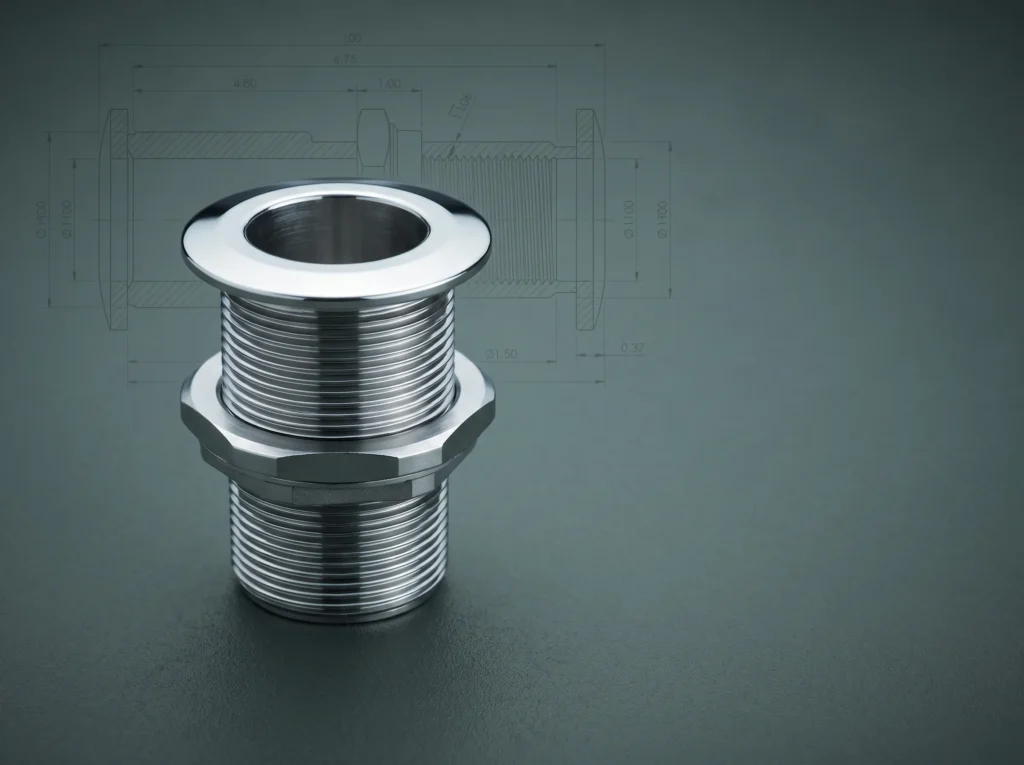
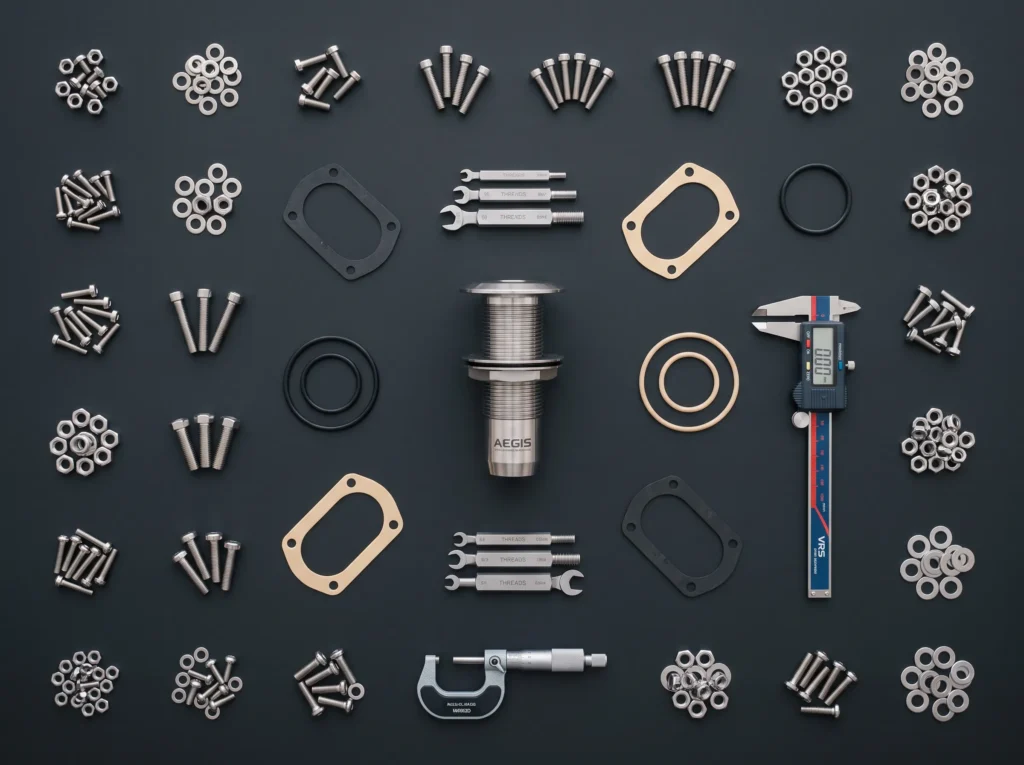
Detailing therefore outranks specification: a sealed threaded junction is a crevice by construction, however good the steel is. Aegis, the VRS through hull fitting machined from a single block with no welds, answers that at the design stage, with fewer junctions and fewer places where the passive film cannot rebuild.
The four variables that set the stainless steel lifespan
Design fixes the ceiling. It decides the grade, 316L or a duplex where sections stay slim under high load, and it decides the geometry: radii that drain, no blind pockets, no unventilated gap behind a flange, isolation wherever stainless sits against aluminium 5083 or 6082. ISO 9093 sets requirements for seacocks and through hull fittings as products. It does not design your installation.
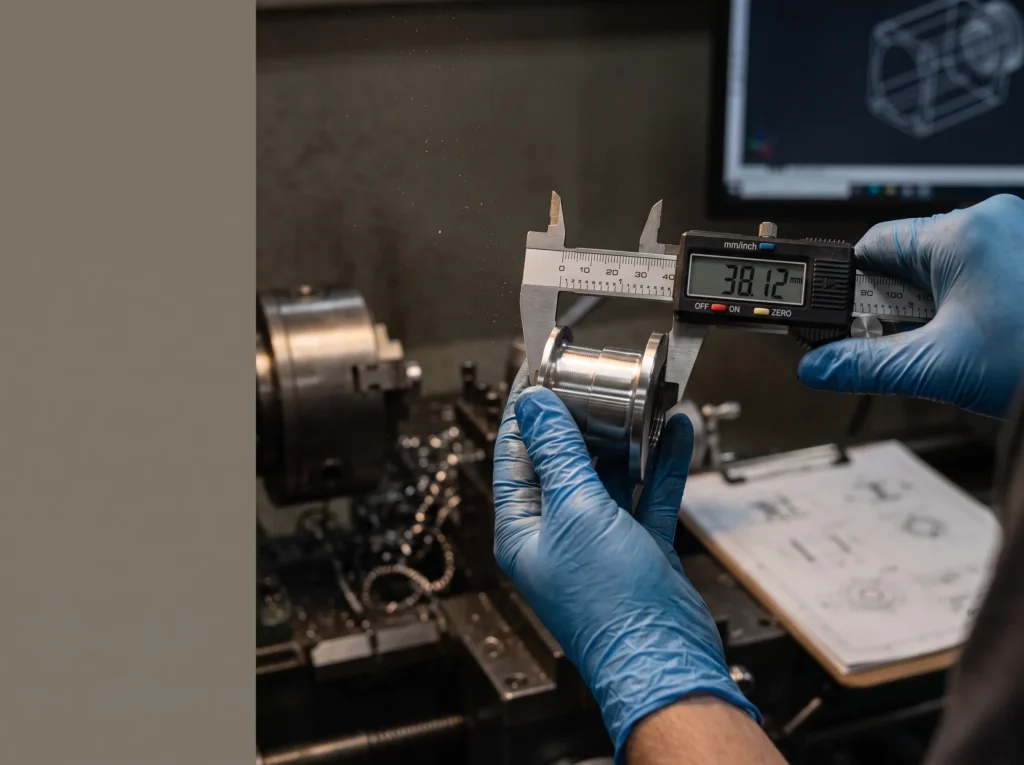
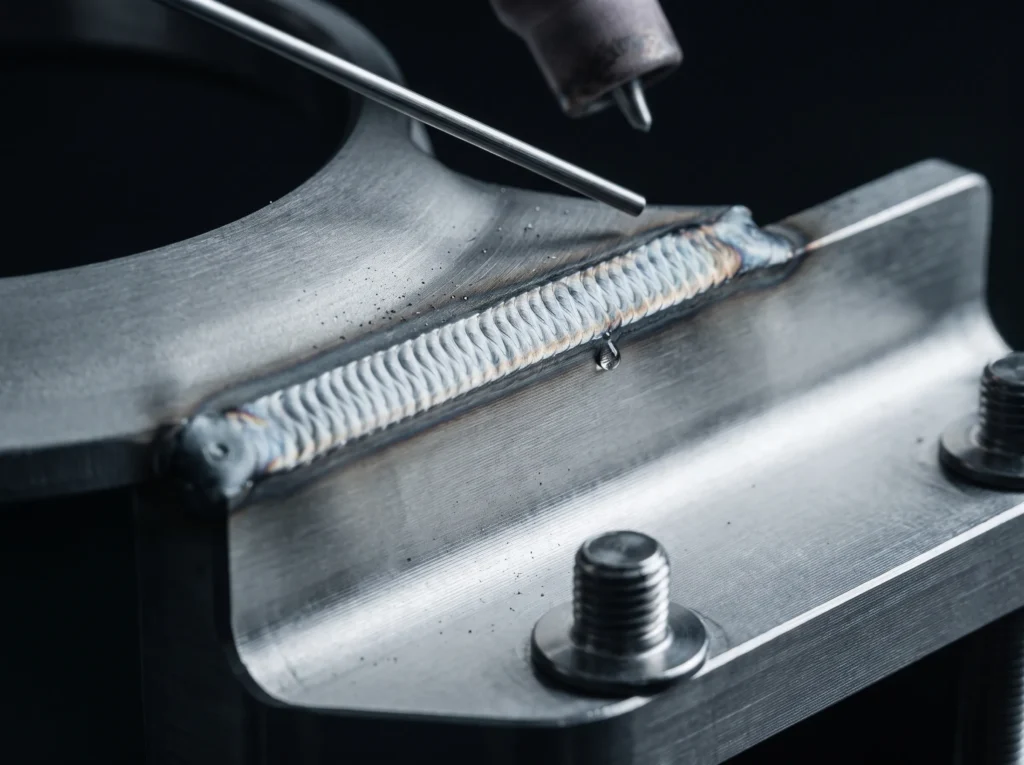
Fabrication decides how much of that ceiling survives. The oxide tint left around a weld is less corrosion resistant than the parent metal until it is pickled and passivated, and L grades limit carbon to reduce chromium carbide precipitation in the heat affected zone. Iron picked up from carbon steel tooling or shared abrasives rusts on a part that is otherwise sound. Machining from solid removes the weld from the equation.
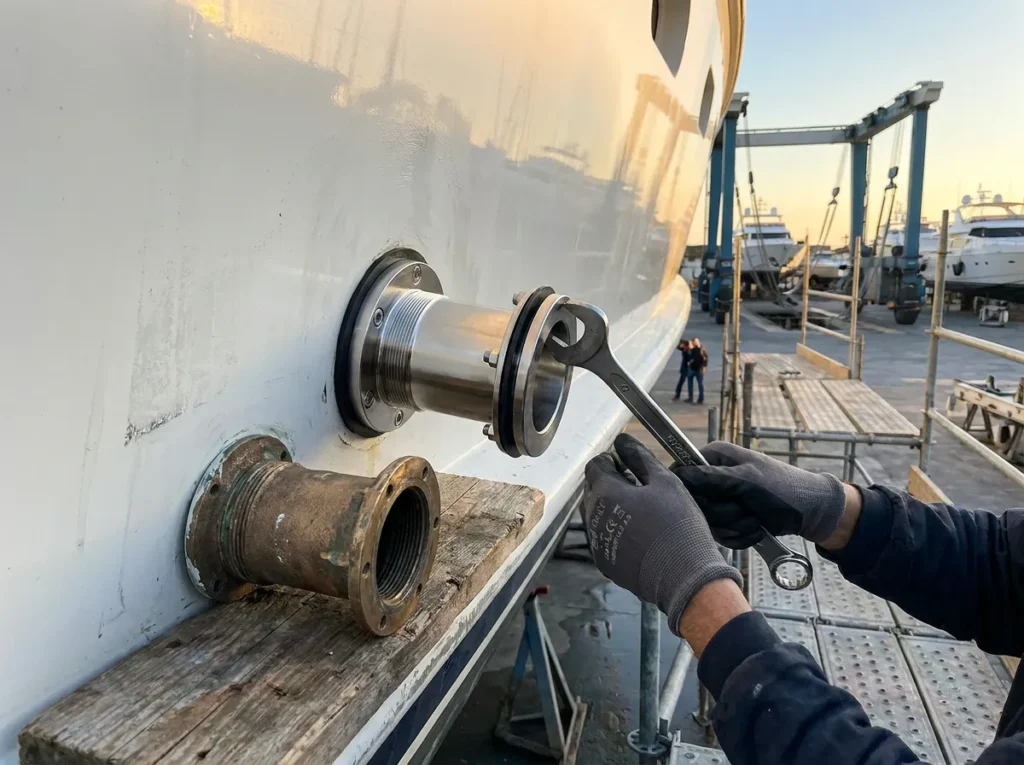
Installation is where the spread is widest and the documentation thinnest. Bedding compound that traps water instead of excluding it, a dissimilar metal contact left unisolated, a flange torqued onto unsupported laminate, drainage blocked on the day the part went in: none of it is visible afterwards, and all of it is decided by someone who often never saw the drawing.
Maintenance can only spend what the first three left: fresh water rinsing, removal of deposits, no carbon steel wool, periodic removal of critical fittings instead of inspection in place, and a written record of what was found. Vessels in class under Lloyd’s Register, ABS or DNV inherit a survey rhythm that supplies this discipline. Everyone else has to impose it.
| Variable | Typical error | Effect on service life | Last point at which it can still be corrected |
|---|---|---|---|
| Design | Geometry that traps unventilated water behind a flange | Sets a ceiling no later care can raise | Before drawings go to manufacture |
| Fabrication | Weld heat tint left unpickled, iron from shared abrasives | Removes resistance locally, so attack starts at a known line | In the workshop, before delivery |
| Installation | Bedding that seals water in, dissimilar metals touching | Can cut life to a fraction of the design intent | At first removal, while the part is sound |
| Maintenance | Rinsing only what is visible, no removal, no record | Turns a repairable fitting into a replacement | At every haul-out, until pitting goes deep |
How the usage profile changes the loading
The same fitting on three vessels is doing three different jobs. On a charter yacht, hinges, dogs and latches accumulate cycles quickly and seals take compression set sooner, so fatigue and wear tend to arrive before corrosion, with the compensation that a crew is aboard and faults are seen early. On a privately cruised yacht the pattern alternates between long salt-wetted passages and idle weeks, loading the surface hard and then leaving the deposits in place.
The quietest profile is the hardest on crevices. A yacht lying alongside for months in a warm Mediterranean berth has standing water in scuppers and drain runs, deposits that are never disturbed, and a galvanic environment shared with its neighbours and the shore supply. Nothing moves, and that is the point: the oxygen in the crevices is never renewed. Each profile is set out in how charter, cruising and long periods alongside wear hardware differently — C5-S05.
Early signs a component is reaching end of life
Rust that appears on a surface is usually contamination. Rust that weeps from a joint, a flange edge or the underside of a base is the component telling you where its crevice is, and that signal matters more than the quantity. Tea staining that returns faster after each cleaning, and spreads rather than fades, says the surface is no longer repassivating properly.
The other early signs are mechanical: a fastener that will not hold torque, growing play in a pivot, a dog that no longer compresses its seal evenly, a fixing hole gone oval, a drain that leaves a stain track where water used to run. A seal that has taken permanent set is a different case, with the metal intact and the assembly no longer watertight. Telling a part that is cosmetically marked from one that is structurally finished is the subject of the four distinct ways a fitting reaches the end of its life — C5-S02.
Frequently asked questions
How long does 316 stainless steel last in saltwater?
There is no honest figure in years, because 316 does not wear out at a predictable rate. It stays intact until local conditions break its passive film, and that depends on the geometry it sits in, how it was finished, how it was installed and how often it is rinsed. Two identical parts on one hull can differ by several multiples.
Why is my stainless steel rusting under the fitting and not on top?
Because the passive film rebuilds only where oxygen reaches the metal. The exposed surface repassivates continuously, while the trapped seawater under the flange loses its oxygen, concentrates chloride and turns acidic. Crevice corrosion starts under milder conditions than surface pitting, which is why the damage stays hidden.
Is duplex stainless steel better than 316 for deck hardware?
Duplex grades offer higher strength and greater resistance to chloride pitting, which makes them worth considering where sections must stay slim under load. They are not a substitute for correct detailing: a duplex part bedded into a water-trapping crevice is still in a crevice.
Does tea staining mean the part has to be replaced?
Not by itself. Tea staining is a surface discolouration, often from iron contamination or deposits left in place, and it usually cleans off without affecting the section. The warning sign is the rhythm: staining that returns faster after each clean deserves removal and inspection of the hidden faces.
Can anything extend the life of a fitting that is already installed?
Yes, within the limit its design set. Removing it at a haul-out, cleaning the mating faces, restoring isolation between dissimilar metals, re-bedding so that water drains instead of being trapped, and recording what was found will recover much of what a poor installation cost.