How water enters a boat hull comes down to three routes and only three: a deck opening, a hull penetration, or a drainage line. Each family has its own failure mechanism, its own signature and its own test. Confusing them is why a leak gets chased for a whole season in the wrong compartment.
In short
- Water enters a boat hull by three routes: deck openings, hull penetrations, and drainage or discharge lines.
- Deck openings leak only while water lies on or sweeps across them, so the leak stops once the deck is dry.
- Hull penetrations leak continuously while the boat is afloat, driven by hydrostatic head, including in flat calm.
- Drainage and discharge lines leak as a function of attitude and use: heel, trim, loading, or a running shower, sink or engine.
- In all three families water crosses an interface between two parts, not the material itself, so the leak is always at a joint.
Route one: how water enters a boat hull from above, through deck openings
This family covers everything on deck meant to open, plus the fixed frame it sits in: hatches, the companionway, flush deck plates, tank and locker manholes, and portlights.
Each opening has two interfaces that fail for different reasons: the gasket pressed against its rebate and held by dogs, latches and hinges, and the frame bedded and fastened to the deck. A hatch can be perfectly watertight when closed and still leak around its own frame.
Gaskets fail by compression set. An elastomer held under load for years loses the elastic recovery it needs to follow a rebate that is not perfectly flat. The rebate loses flatness too, distorted by uneven fastener load or deck movement, and worn dogs drop the clamping force further. Under the frame, bedding compound ages, loses adhesion and opens a path into the deck core, where water travels laterally and emerges metres away.
The signature is weather dependence: no rain, no spray, no wash-down, no green water, no leak. Heel concentrates the flow to leeward, and the drip almost never appears under the opening, because the water runs along a beam, a headliner or a bulkhead before it falls. One cheap check removes this family from the search: rain water is fresh, and conductivity or taste says so. ISO 12216 sets strength and watertightness requirements for hatches, portlights, windows, deadlights and doors on small craft.
Route two: hull penetrations, at and below the waterline
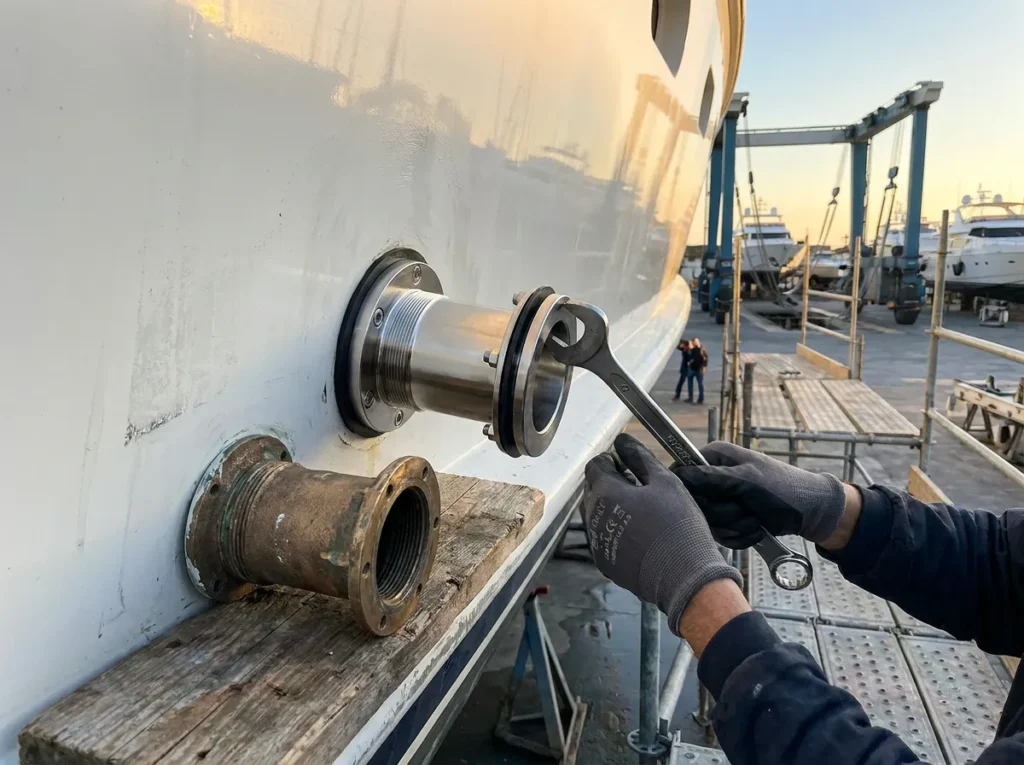
This family is every component crossing the laminate or the plating in way of the water: through hull fittings and seacocks for engine cooling, heads and air conditioning; shaft seals and rudder stock tubes; transducers; anode studs and bonding fasteners.
Corrosion does most of the work. Seawater trapped in the gap under a flange, inside a thread or behind a backing plate is depleted in oxygen and enriched in chloride, and in those conditions the passive film on austenitic stainless cannot repair itself. Crevice corrosion then starts in a gap nobody can see without disassembly. Where dissimilar metals are in electrical contact in seawater, the galvanic series decides which one is consumed. Mechanical causes sit alongside the electrochemical: failed bedding, a flange pulled down onto an uneven surface, a relaxed hose clamp, worn packing.
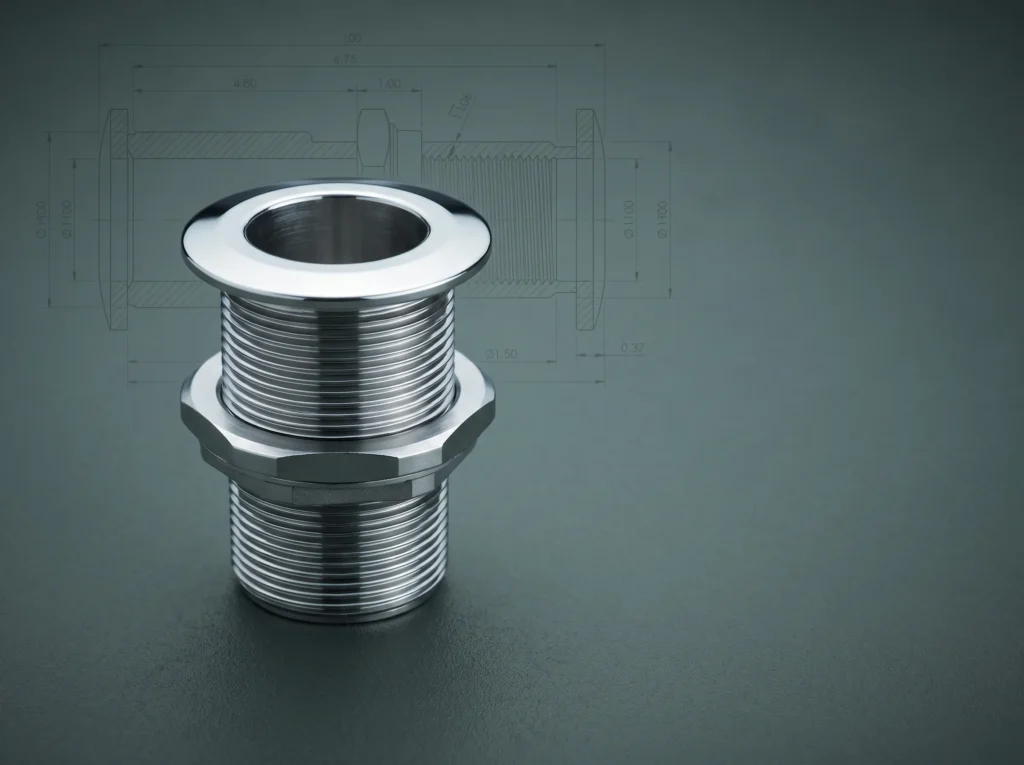
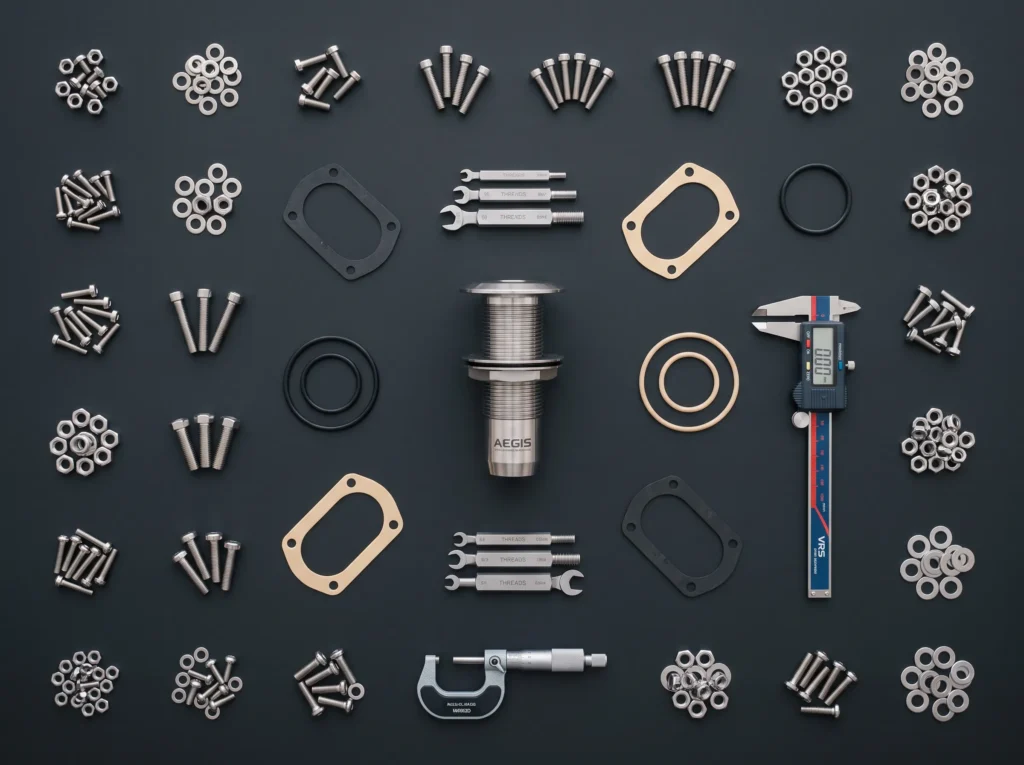
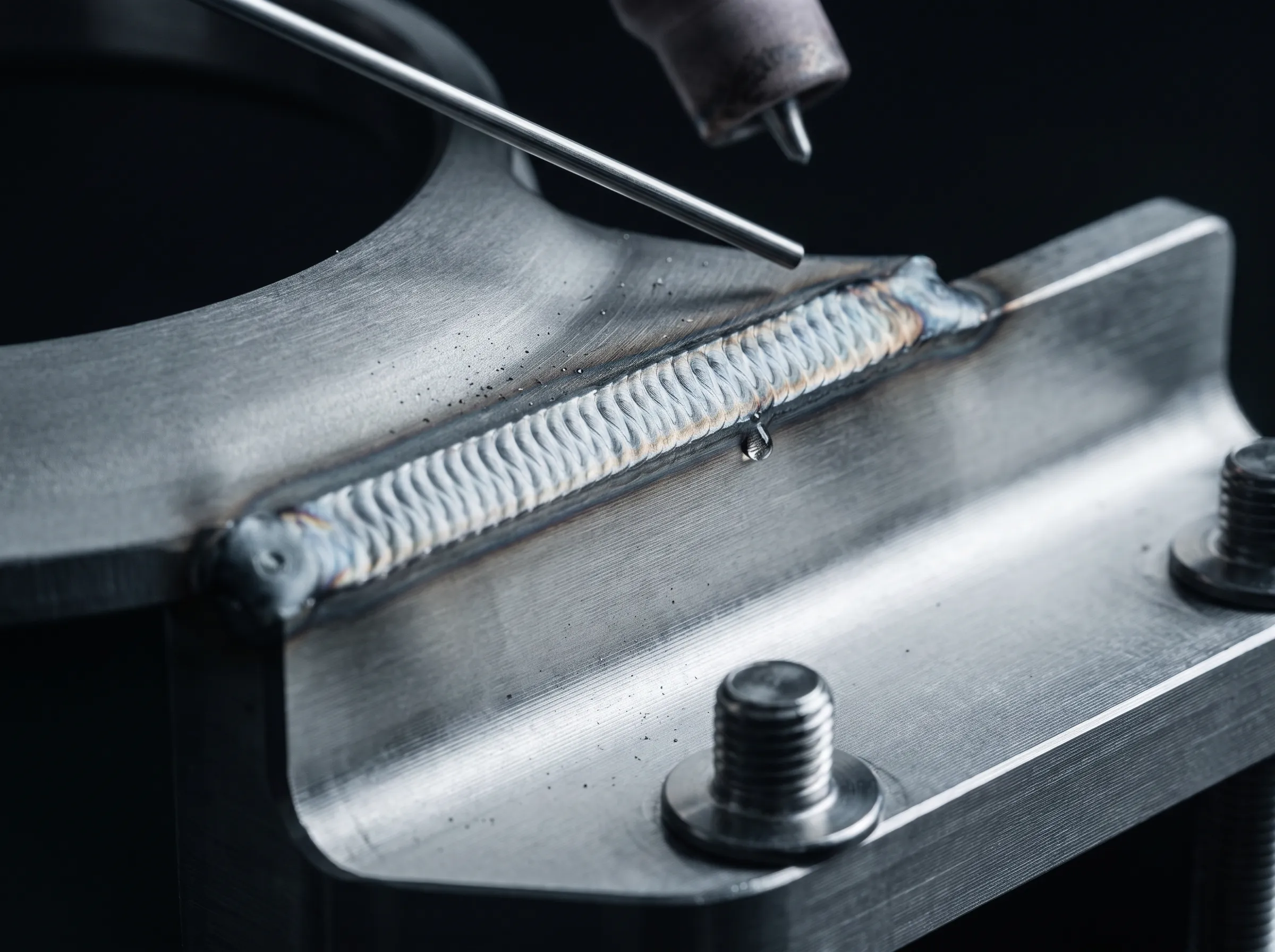
A welded assembly adds an interface in the worst place. The weld seam and the heat affected zone differ from the parent material in metallurgy and surface condition, and that is usually where attack begins. The design response is to remove the seam rather than protect it, the logic behind Aegis, the VRS through hull fitting machined from a single block with no weld.
The signature is constancy. The boat is alongside in flat calm, it has not rained, no system is running, and the bilge pump still cycles. The rate changes little with weather and grows with immersion depth, because the driving pressure is hydrostatic. Shaft seals are the exception that still belongs here: they also respond to rotation and alignment, so they pass more water underway. ISO 9093 covers seacocks and through hull fittings on small craft.
Route three: drainage and discharge lines
Cockpit drains, deck scuppers, anchor locker drains, shower sumps, grey water discharges, tank vents and the engine exhaust belong here. By design these lines straddle the waterline: the inlet above it, the outlet at or below it.
This is the only family built to carry water, so its failure mode is inverted. The problem is not water forcing its way in from outside but water escaping the line inside the boat, or climbing back up it. The run is long, usually hidden, and fails anywhere along its length: a split, a section chafed against a bulkhead, a relaxed clamp, a cracked spigot. The outlet is the other half of the problem. One sized to sit above the waterline goes under with heel, loading or a stern-down trim, and the line back-floods. A siphon break that is blocked, or fitted too low to work, turns a discharge into a siphon.
The signature is attitude and use. Water appears on one tack and not the other, or only when the boat is loaded, or only while the shower or engine runs. Volume can be large and sudden, because a failed drain line delivers the full flow of a hose rather than a seep. ISO 11812 addresses watertight and quick-draining cockpits and recesses.
Telling the three apart in thirty seconds
Three questions, asked in this order, place almost any ingress before anyone opens a locker.
- Afloat alongside, flat calm, nothing running, and still leaking? A hull penetration.
- Leaking only while the deck is wet, stopping once it dries? A deck opening.
- Leaking only at a given heel or trim, or only while a system runs? A drainage or discharge line.
| Family | Typical locations | Why it fails | When the leak shows | How to confirm |
|---|---|---|---|---|
| Deck openings | Hatches, companionway, deck plates, manholes, portlights | Gasket compression set, rebate out of flat, aged bedding | Rain, spray or green water only; worse heeled, to leeward | Hose test in stages, low to high; fresh water signature |
| Hull penetrations | Through hulls, seacocks, shaft seals, rudder tubes, transducers | Crevice and pitting corrosion in stagnant gaps, galvanic coupling | Continuously while afloat, flat calm included; rate steady | Dry the fitting and watch it afloat; salt trails; haul out |
| Drain and discharge lines | Cockpit drains, scuppers, anchor locker drains, shower sumps | Chafed or split hose, failed clamps, immersed outlet, failed siphon break | Only at a given heel, trim or loading, or while a system runs | Flood the line with the outlet immersed; walk the run |
Two variables cut across all three families and change what a test proves: static and dynamic seals do not fail in the same way, and the pressure a fitting holds depends on how deep it sits. Both are treated separately below.
The principle behind all three: water crosses interfaces, not materials
In none of the three families does the water pass through the material. Glass-reinforced laminate of hull thickness does not leak, AISI 316 bar does not leak, a 5083 plate does not leak. What leaks is the gasket against its rebate, the flange against the hull, the hose against its spigot, the weld against the parent metal, the thread against its mate.
That reframes the question asked at the drawing stage. It is never whether a material is watertight, but how many interfaces a component creates and how each one is controlled. A fitting assembled from three welded parts has more interfaces than the same fitting machined from solid, and a hatch frame both bonded and fastened opens two paths into the deck, not one. Counting interfaces on the drawing is the cheapest leak prevention available, and it is why refit yards in Viareggio and across the Mediterranean spend a leak investigation on joints and almost none of it on panels.
Frequently asked questions
How do I tell if a leak is above or below the waterline?
Watch when the water appears, not where it lands. A leak that continues with the boat afloat in flat calm, no rain and nothing running, is below the waterline; one that stops as soon as the deck dries is above it.
Why does my bilge only fill when the boat is sailing?
Shaft seals respond to rotation and alignment, so they pass more water underway than at rest. Separately, discharge outlets close to the waterline go under with heel and let the line back-flood, which is a drainage failure, not a hull penetration failure.
Can a through hull fitting leak with no visible corrosion?
Yes. Crevice corrosion develops inside the stagnant gap under a flange or within a thread, so the damaged surface is the one against the hull and stays invisible until the fitting comes out.
Does a hose test prove a hatch is watertight?
Only partially. Applied progressively from low to high it reproduces rain and wash-down and finds a failed gasket or failed frame bedding, but not the impact of green water or the pressure a submerged opening sees.