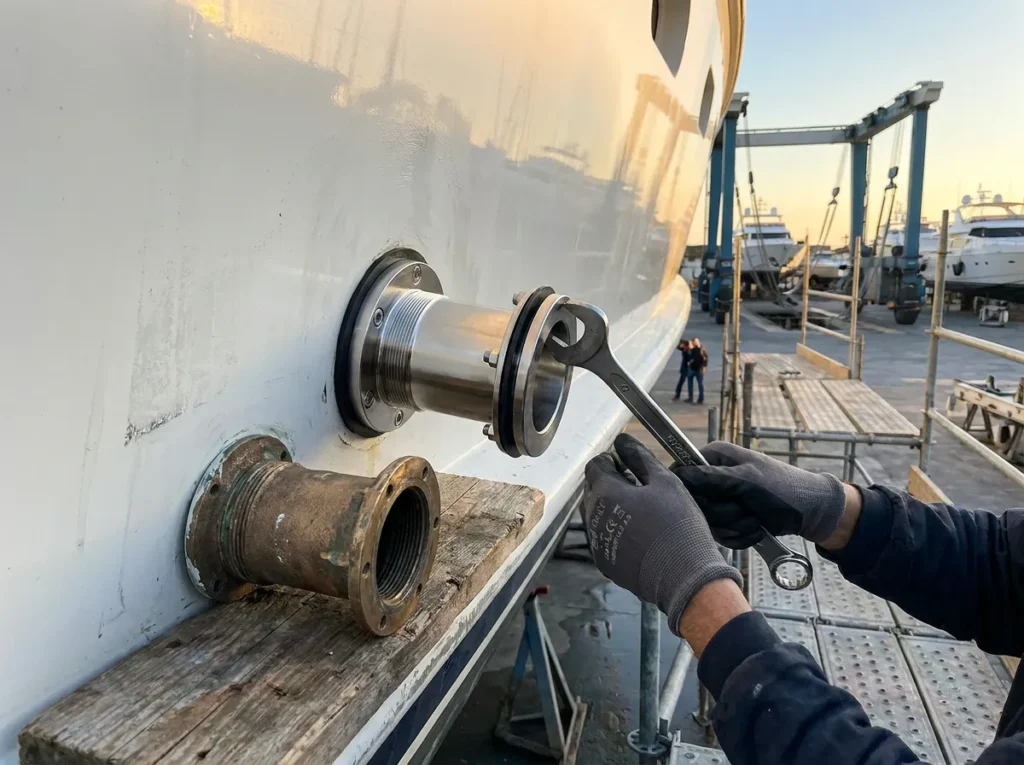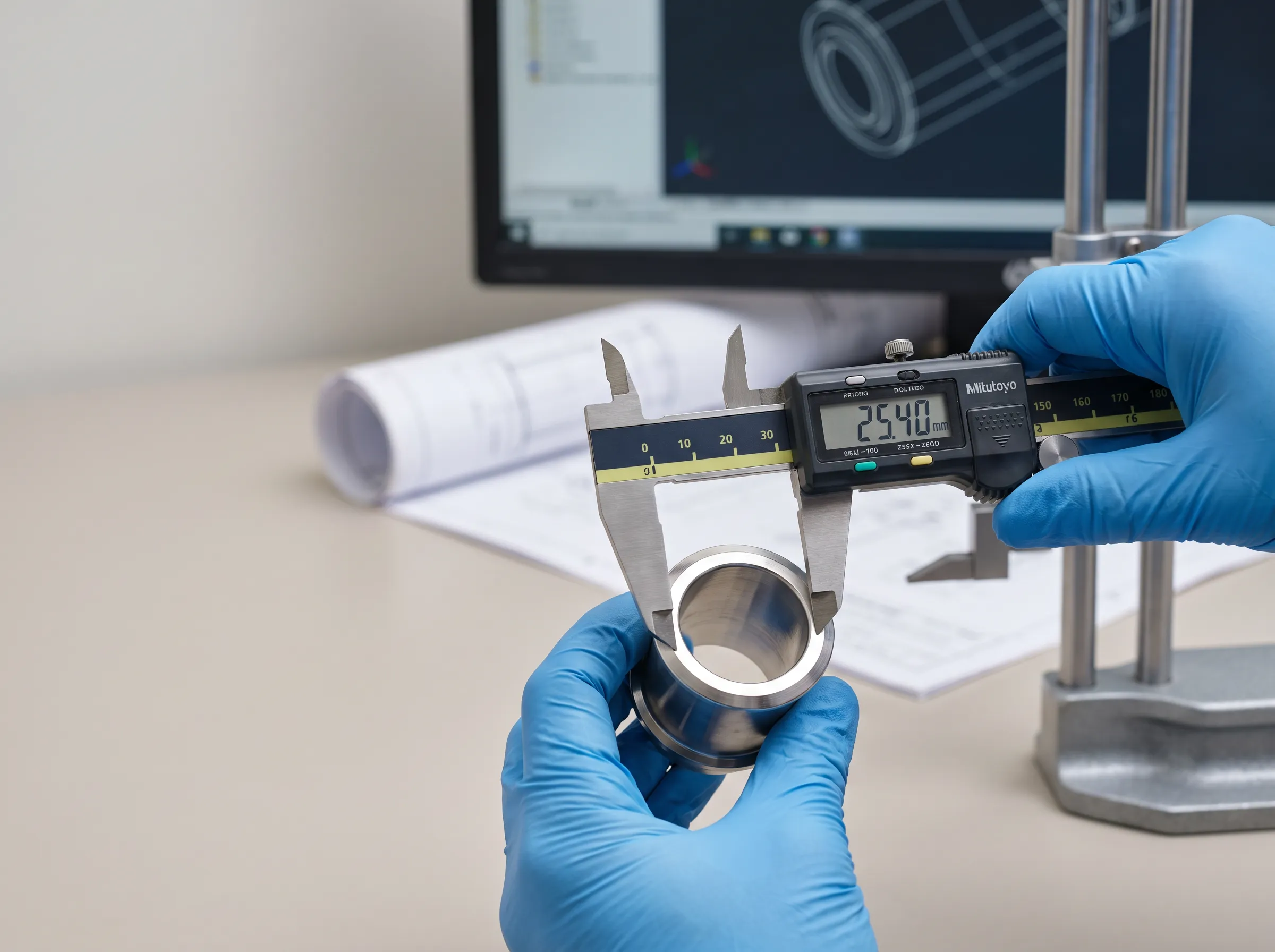
A static vs dynamic seal marine problem is not one problem with two settings, it is two problems with different physics. In a static seal the two faces do not move relative to each other and the gasket works under sustained compression; in a dynamic seal the faces move, and the sealing element works under friction and wear. Selection, geometry and inspection all follow from that distinction.
In short
- A static seal separates two surfaces that do not move relative to each other, and it holds as long as the elastomer delivers a contact pressure higher than the pressure it resists.
- A dynamic seal separates surfaces in relative motion, rotating, sliding or opening and closing, and it holds only as long as friction, lubrication and contaminant exclusion stay under control.
- A static seal fails by losing contact load, through compression set, stress relaxation and ageing; a dynamic seal fails by losing material, through wear and abrasion.
- Most deck closures on a yacht are hybrid, static under way and dynamic for the seconds of each opening, so their life runs on two counters, elapsed time and number of cycles.
- Inspection follows the regime: a static seal is checked for retained load and a continuous witness imprint, a dynamic seal for clearance, wear track and counterface condition.
Static vs dynamic seal marine design: a difference in kind, not in degree
The two regimes differ in how energy behaves at the interface. A static seal is charged once, at assembly: the elastomer is compressed, stores elastic energy and has to keep returning it as contact stress for years without any sliding. Nothing is dissipated and nothing is removed, so what degrades is the stored load, under time, temperature, chemical exposure and ultraviolet light.
A dynamic seal is charged continuously. Every stroke, revolution and opening dissipates energy at the contact and removes material from the sealing element, the counterface, or both. Here the geometry of the parts degrades, not only the state of the elastomer.
Compression shows that the difference is one of kind. More compression on a static joint generally widens the margin, until the groove is full. More compression on a dynamic seal raises friction, local temperature and wear rate. Two problems that respond in opposite directions to the same input are not two grades of one problem.
What governs a static seal: compression that has to last
A static seal holds because the elastomer is compressed enough to conform to the micro-irregularities of both faces and to maintain a contact stress above the differential pressure across the joint.
Geometry sets it. Groove depth and width, groove fill, flatness and parallelism of the landing faces and the finish of the machined rebate decide how much of the available deflection becomes useful contact pressure. A landing that has lost flatness through impact or repair leaks with a sound gasket in it, because contact stress collapses where the gap opens.
Distribution matters as much as magnitude. Load applied at discrete points, through bolts or dogs, bends the flange between them, so the gasket is overloaded at the fasteners and the leak appears at the midpoint of the longest span.
Time erodes it. Compression set is the deflection an elastomer no longer recovers after prolonged compression, so residual load falls; stress relaxation reduces load at constant deflection; ozone and chemical attack alter the compound. The structure relaxes too, as composite flanges creep and bedding settles, so a static joint can lose its seal with no visible mark on the gasket.
What governs a dynamic seal: friction, film and contamination
A dynamic seal does everything a static seal does and then survives motion: rotary, as on a shaft or rudder stock seal, reciprocating, as on the rams that drive passerelles and tender lifts, intermittent, as on every lid and door.
The sealing lip needs a film between itself and the counterface; without it the contact runs dry, stick-slip sets in and the lip abrades. The counterface has to be smooth enough not to cut the elastomer and rough enough to retain the film, which is why both coarse and mirror-polished surfaces shorten seal life.
Alignment decides where the wear goes. Eccentricity concentrates contact pressure on one side, so the wear track becomes asymmetric and leakage appears in one sector long before the seal is worn all round. That is geometry, not material.
Contamination does most of the damage. On deck, salt crystallises on the air side of every seal and arrives with sand and grit, which act as a lapping compound at the interface. Dynamic assemblies therefore carry a wiper upstream of the pressure seal, so a sacrificial element excludes the solids. Clearance belongs to the same family, since an excessive gap under pressure lets the elastomer extrude into it and be nibbled away.
Hatches and lids: static at sea, dynamic at every opening
The hybrid case is the most common on board and the least often treated as such. Aetos, a watertight hatch, is the clearest example. Dogged down it is a pure static seal and its enemy is set. Opened, it becomes a dynamic event: the gasket is released, loaded again on closing, and in many designs dragged across the landing while that happens.
Closing kinematics decide how much of that event is compression and how much is shear. A simple pivoting lid touches the gasket near the hinge first and rolls it toward the latch as it comes down, so part of the profile is sheared rather than compressed. A motion that brings the lid down parallel to its landing loads it in compression along the whole perimeter.
Two identical hatches, one opened several times a day and one twice a season, therefore reach the end of gasket life for different reasons. Hardware built for this duty in the Viareggio yards is machined from solid so that landing and groove come out of the same setup.
ISO 12216 sets strength and watertightness requirements for windows, portlights, hatches, deadlights and doors on small craft, and tests the closure as an assembly: gasket, landing and closing hardware pass or fail together.
Two regimes, two inspection criteria
| Criterion | Static seal | Dynamic seal |
|---|---|---|
| Relative motion | None | Rotary, reciprocating or intermittent |
| What creates the seal | Sustained compression | Compression plus a maintained lubricating film |
| What governs it | Compression, flatness, groove fill, uniform clamp load | Friction, lubrication, alignment, clearance, contaminant exclusion |
| Dominant failure mode | Loss of load: compression set, relaxation, ageing | Loss of material: wear, abrasion, extrusion |
| How life is counted | Time under load and environment | Cycles, sliding distance, contamination |
| What inspection looks for | Gasket recovery, continuity of the imprint, landing flatness | Clearance and play, wear track symmetry, lip and counterface condition |
| What a correction involves | Restoring load and face geometry | Restoring clearance, finish and exclusion |
On a static seal the question is whether the load is still there, and the evidence is the imprint the landing leaves on the gasket. A continuous, even witness mark around the perimeter means load is still distributed; a faint or interrupted sector is a leak that has not happened yet. A gasket that no longer recovers its section has spent its reserve even if the joint is dry.
On a dynamic seal the question is how much material has gone: play, a visible wear track, scoring on the counterface, a shift in when leakage starts. A dynamic seal rarely fails without warning, it fails after a period in which someone could have measured the clearance.
Where a seal actually gives way
Neither regime fails uniformly. Both start leaking at discontinuities, at a corner, a change of section, the spliced joint of a gasket ring, a mechanism that deserves its own treatment. Compound selection is a separate question, since resistance to compression set and resistance to abrasion rarely peak in the same material. This article settles the step before both: which of the two problems is on the table.
Frequently asked questions
What is the difference between a static and a dynamic seal?
A static seal sits between surfaces that do not move relative to each other and works purely in compression; a dynamic seal sits between surfaces in relative motion and works in compression plus friction. The difference is physical, not a matter of severity.
Can the same gasket be used for a static and a dynamic application?
Rarely, because the two duties ask for opposite properties. A compound chosen for resistance to compression set may have poor abrasion resistance, and a compression that gives a safe margin on a static joint can generate excessive friction and heat in a sliding one.
Is a hatch seal static or dynamic?
Both, in sequence. A hatch gasket is a static seal while the hatch is closed and the boat is under way, and it goes through a dynamic event at every opening, so its life has to be assessed against time under compression and against the number of cycles.
Why does a static seal leak when nothing has moved?
Because the load that created the seal has decayed, rather than the seal having been damaged. Compression set, stress relaxation, creep in a composite flange and settlement of the bedding all reduce contact pressure, and the leak starts where it drops below the differential pressure first.